


My team and I visited seven trade shows—Summer Fancy Food Show, SUPERZOO, Newtopia Now, NACS, Rooted Expo, Coffee Fest, and FNCE—and spoke face to face with 398 CPG brands.
That changed how we thought about retention.
A customer buys a product. The brand records a sale and starts a retention flow. For the customer, the important part is just beginning.
They bring it home. Find a place for it. Try it, share it, forget it—or make it part of their routine. Somewhere between the first cup, the packed lunch, and the evening feeding, they decide whether they want it again.
That decision does not happen inside a marketing dashboard. Yet the tools brands rely on to bring people back-email and SMS-often work by interrupting them. Another message. Another notification. Another demand for attention.
In our conversations, we kept returning to the tension: constantly demanding attention can wear down the relationship. Without a practical alternative, sending another message remains the default.
What if brands could stay close to where their products are used—useful and easy to return to—without constantly interrupting?
That question led us to Hommio.
Today, we’re happy to announce that FridgeChannels is becoming Hommio.
Hommio is an in-home retention solution for consumer brands, built around a simple belief:
Retention is at home.
First, what exactly are we offering?
A Reorder Magnet customized for your brand, connected to an AI-powered digital experience—and a plan for getting it into the right households.
Here is how it works.
Together with the brand, we decide which orders should include a magnet: a first purchase, a starter kit, or another shipment where it makes sense. We design it around the brand’s identity and give customers a clear reason to keep it and tap it.
The brand includes the magnet with the product. The customer opens the package and can place it on the fridge or another convenient magnetic surface at home. The packaging goes away. The brand’s way back can stay.
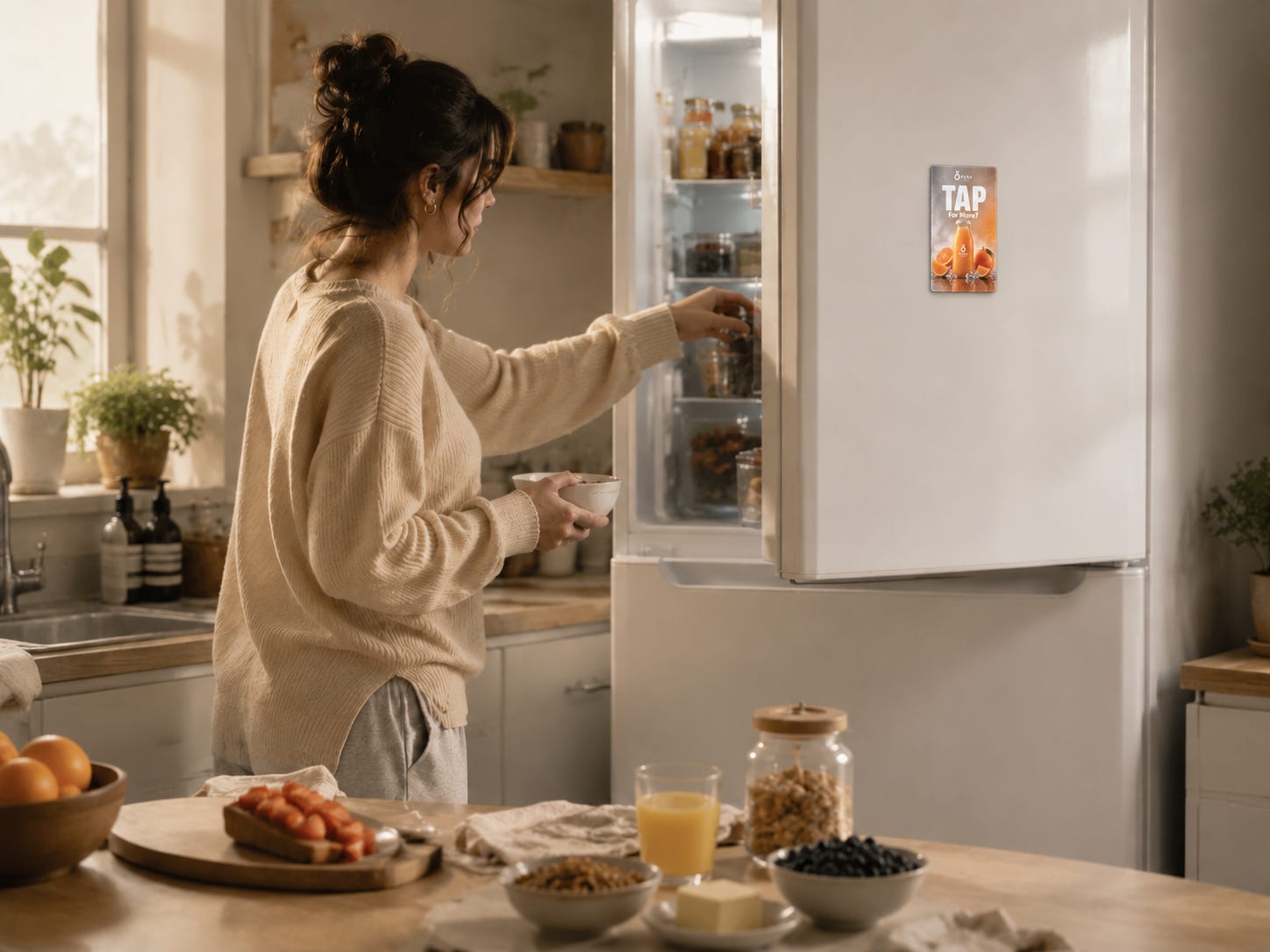
When the customer wants more—or needs help—they tap the magnet with their phone to open the brand’s digital experience. That could mean finding product guidance, answering a short question, receiving a relevant offer, or returning to the brand’s store or original selling channel to reorder.
The AI-powered experience uses information customers choose to share and available interaction and reorder data to help personalize what they find. The brand can update that experience without sending a new magnet.
The magnet is physical. The experience can evolve. The customer decides when to engage.
That is Hommio: deployment planning around the brand strategy, branded Reorder Magnets, and in-home retention intelligence working together. Now, here is the thinking behind it.
What does retention at home look like?
Not a campaign following someone into the kitchen. Not another screen asking for attention.
A coffee drinker notices the bag is nearly empty and has an easy way to buy it again. A pet owner finds an answer before deciding whether to reorder. A household can tell a brand what it needs instead of receiving the same reminder as everyone else.
These are everyday scenes, not claims of measured results. They show the experience we want to build: a brand that is available without being insistent, and a relationship that gets more useful over time.
01. Brands must be ambient.
From buying attention to earning presence.
Attention and presence are different things. A notification asks you to stop. A useful object you have chosen to keep can wait until you need it.
At SUPERZOO, I discussed this with Alan, the CEO of FranklyPet. We talked about email, text messages, and the feeling of having your attention pulled away. I said we wanted a way for brands to be more present.
Alan supplied a word: “Ambient.”
Exactly. There, without always announcing itself.
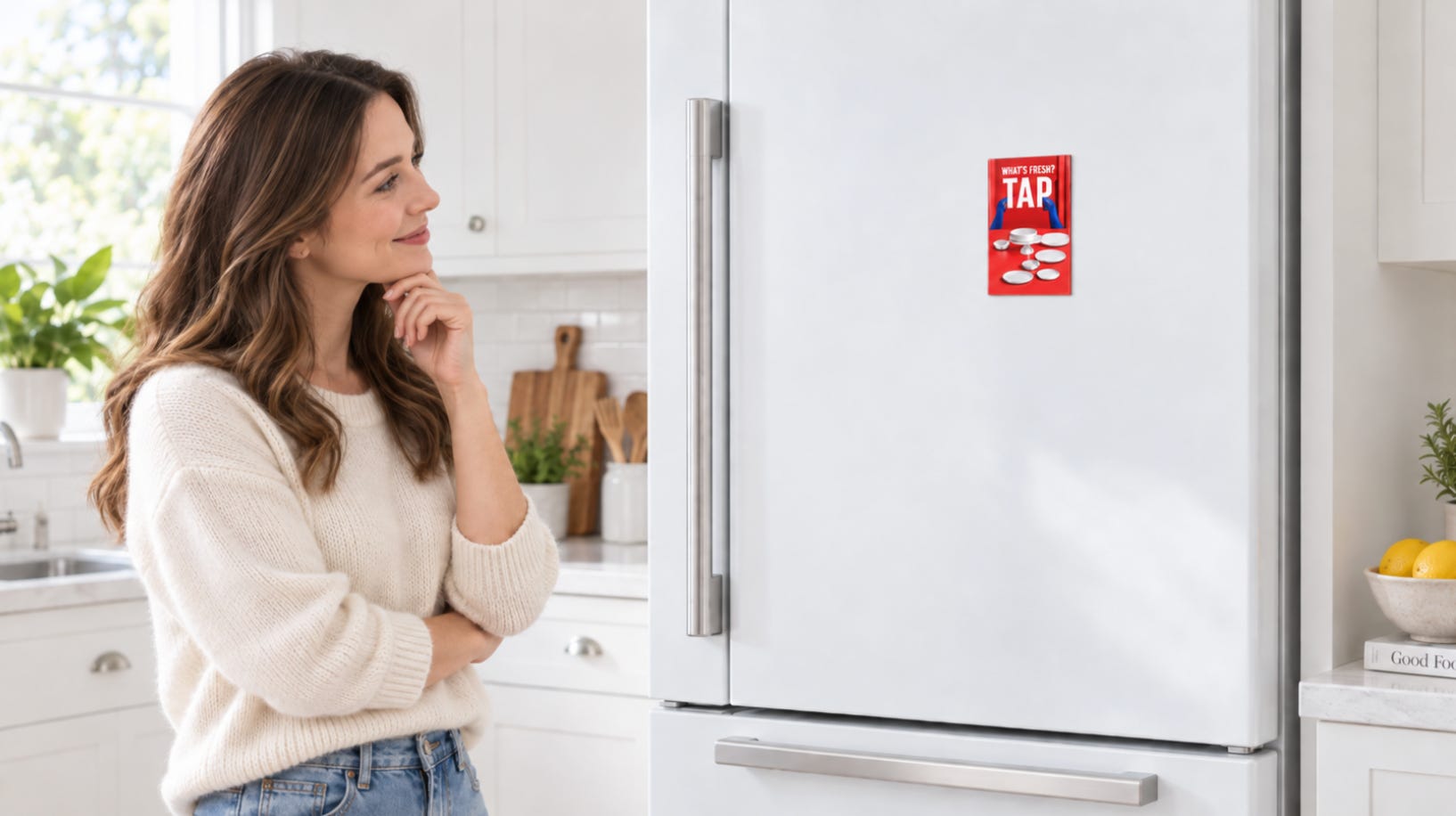
Imagine a coffee brand on a magnet you like enough to keep on your fridge. You reach for milk, pack lunch, make breakfast. It stays in the background. Nothing to dismiss. Nothing to unsubscribe from. When you need coffee, it becomes useful.
Or a pet-food brand near the cupboard where feeding happens. It belongs beside the routine—not in a text message arriving halfway through a work meeting.
Hommio makes this tangible through a branded AI-powered Reorder Magnet. Customers can keep it on their fridge or another everyday surface, then tap with a phone to reach products or useful content.
But putting an object in a box is distribution. Getting someone to keep it is something else.
The design must deserve the space. The experience must deserve the tap. A magnet that stays on the fridge but leads nowhere useful has solved a printing problem, not a retention problem.
A kitchen already has things that earn their place: the recipe someone uses every Sunday, the shopping list, the photo that makes them smile. A brand enters that company by being welcome, not by being loud. Repeated exposure is a consequence of being kept—not permission to demand repeated engagement.
The home is the customer’s space. Buying a product does not mean they have rented the brand an advertising slot beside the family photos.
That is why ambient presence must preserve choice. The customer decides whether to keep it, when to engage, and when to leave it alone. The brand stays available.
When I need you, take me straight there. When I don’t, leave me in peace.
Email and SMS still have a role. They should not be the only way a brand knows how to remain close.
Be easy to reach. Not impossible to escape.
02. Every sale strengthens the channel.
A sale should leave behind more than revenue.
We usually judge a channel by the orders it produces. Revenue is recorded; the channel has done its job.
But the product keeps going. Into a household, a cupboard, a daily routine. That journey can carry something else: a useful way back to the channel that made the sale.
At SUPERZOO, Shelby Woods from Pet Releaf took the magnet we were demonstrating and put the idea plainly: “I can tap this to reorder.” Shelby then described the experience back to us: the customer receives the magnet, understands the message, and taps to return.
A way back, not just a receipt.
Consider two possible journeys. Someone orders snacks from a brand’s own store; the delivery includes an entry point back to that store. Another household buys through Amazon; its return path leads to the brand’s Amazon Brand Store.
Or consider a family that discovers a sauce at a local retailer. They finish the bottle weeks later and want another. A useful route back could help them find that product at the same retailer, where a suitable buying experience is available. The first sale has not merely moved inventory; it has helped make the next visit possible.
Different destinations. Same principle: the first purchase makes the next one easier.
This is not about moving every customer into DTC. The original retailer, marketplace, or brand store can remain the destination. The practical route depends on the available experience and channel arrangements.
Another SUPERZOO conversation made the economics personal. A founder getting started in DTC told us acquiring a first order cost about $40. As we discussed including a magnet in that shipment, the founder recognized that this was an order already acquired. The business had already paid to begin the relationship. What would help it continue?
The question is not simply how much another insert costs. It is what the shipment leaves the customer able to do after the packaging is gone.
A box of snacks gets eaten. A supplement bottle gets emptied. If the experience was good, there is a reason to return. A lasting entry point can help turn that reason into an action.
It cannot rescue a disappointing product. No reorder button makes bad coffee taste better. The product must earn the next purchase; the channel should make it easy to complete.
Channels generate sales. Sales should strengthen channels.
03. Retention Intelligence begins where the product is consumed.
Understand the life around the order.
A transaction tells a brand what someone bought. It does not explain what happened next.
Did the coffee become a morning habit? Did the supplement sit unopened because the instructions were confusing? Did one person eat the snacks—or did three children finish them by Tuesday?
The same order can mean very different things in different homes.
Imagine two households buying the same coffee on the same day. One makes a cup each morning. The other makes coffee for four people. A reminder based only on purchase date treats them alike. Information they choose to share could help the brand offer more relevant replenishment options.
At SUPERZOO, our demonstration to Shelby included short surveys and the small windows someone might have while waiting for coffee or the microwave. In the FranklyPet conversation, we discussed questions about the pets in the household.
The point is not to turn every idle minute into a survey. It is to make a chosen interaction worth having.
A pet owner might share how many dogs they have. A household might say, “We use two packs a month.” Someone trying a supplement might ask how to use it before they need another bottle. Each is an opening to help, not merely collect another field.
Hommio’s In-Home Retention Intelligence combines information customers choose to share with available interaction and reorder data to inform content, replenishment plans, and reorder options.
Imagine that supplement customer returning with a question rather than an order. Sending them straight to another discount misses the need. Useful guidance may be the better response. The relationship deepens when the brand recognizes that “help me use this” and “sell me more” are not the same request.
There is a clear boundary: a magnet in the kitchen does not tell us what happens in the kitchen. A tap is not proof of satisfaction. Silence is not proof of disinterest.
We learn by listening and using the data we actually have—not by pretending to observe people’s lives.
And learning should change the service. Answer the question. Offer the relevant product. Make replenishment easier. If a customer has told us what they need, the next visit should not feel as though we have never met.
If knowing more only gives a brand more reasons to interrupt, we have missed the point.
04. Reorder in 10 seconds, without being hijacked.
Buying it again should not be harder than deciding to buy it again.
You are in the kitchen. The coffee bag is nearly empty. You like this coffee. You want the same coffee. This should be a short story.
Then you pick up your phone.
Unlock it. Enter the passcode. Find the app. Open it. Search the brand. Correct the spelling. Scroll. Was it the blue bag or the slightly different blue bag? Tap. Wrong size. Go back.
You wanted coffee. Apparently, you have enrolled in a small administrative project.
Problem one: too much work between “I want it” and “I bought it.”
The decision is made, but the task is not finished. The kettle boils. A child needs something. Buying coffee joins the list of things to do later.
Problem two: the long way back is lined with people selling detours.
A sponsored result offers another coffee. A recommendation suggests a different brand. A notification would like a word. You came for your usual coffee; now three competitors and a video of a raccoon have a chance.
This imagined journey illustrates the connection: more steps create more openings to interrupt, redirect, or resell the customer’s attention.
For the brand, it is almost comic. You made the product. Earned the purchase. Delivered something the customer liked. They decided to return. Now an advertising system asks: “Lovely customer you have there. Would you like to pay to reach them again?”
Hommio aims to shorten both the work and the exposure to distraction: tap from the home, return to the original selling channel, finish with as few steps as possible.
At SUPERZOO, one prospect asked, “So you mean that they just tap it and it goes right to the shop?” That is the test: does it take the person where they intended to go?
Imagine noticing the dog food is low as you leave home. Or packing tomorrow’s lunch and taking the last snack. Act on the need while it is in front of you, instead of remembering to search later.
For the coffee drinker, the goal is pleasantly uneventful: notice, tap, reach the product, reorder. Back to breakfast.
No rediscovery expedition. No coffee audition.
Ten seconds is our design goal. Sign-in, payment, stock, and channel requirements affect actual checkout time. Normal selling fees may still apply; those are different from paying again for attention.
Nor can we remove every competing offer from a marketplace. Our Amazon approach avoids the search detour by landing in the brand’s Store; competition may still appear on subsequent product pages.
When the customer has already decided, help them finish—not start over.
FridgeChannels began with a place on the fridge. Hommio is about the place a brand earns in everyday life.
Not another message to dismiss. A useful presence when the coffee runs low, the pet food is nearly gone, or the snack cupboard is empty, a question comes up, or someone thinks, “I want this again.”
That is the relationship we’re building for.
Hommio: Retention is at home.
— Billy HAO